
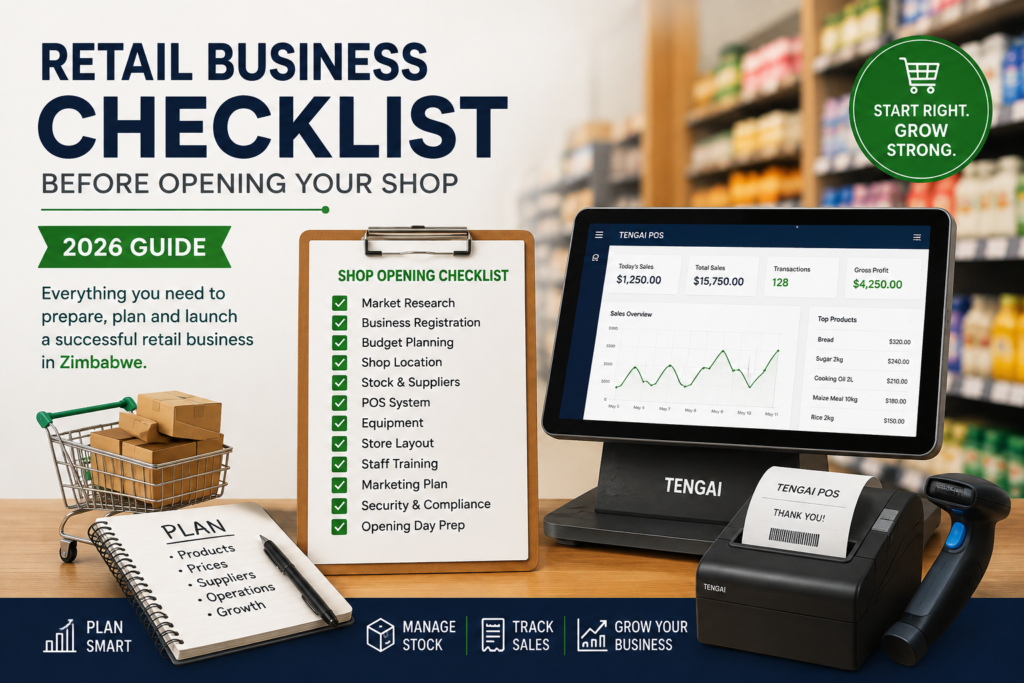
Starting a retail business is exciting, but success begins long before you make your first sale. Whether you’re opening a grocery store, bottle store, hardware shop, pharmacy, clothing store, or electronics shop, having the right plan can save you thousands of dollars and countless headaches.
This checklist walks you through everything you need before opening your shop and explains how modern tools like a Point of Sale (POS) system can help you operate more efficiently from day one.
Why Planning Matters
Many retail businesses fail not because there isn’t demand, but because they begin without proper preparation. Common issues include:
- Running out of stock too quickly
- Poor record keeping
- Pricing products incorrectly
- Choosing the wrong location
- Cash shortages
- Stock theft
- Lack of inventory management
A proper checklist helps you avoid these problems before they happen.
1. Research Your Market
Before investing your money, understand your customers.
Ask yourself:
- What products are people buying?
- Who are my competitors?
- What prices do they charge?
- What products sell the fastest?
- Is there enough demand?
Visit competing shops and observe:
- Customer traffic
- Product range
- Pricing
- Customer service
- Peak shopping hours
Understanding your market helps you stock products customers actually want.
2. Choose the Right Location
Your location can determine whether your business succeeds or struggles.
Look for locations that have:
- High foot traffic
- Easy accessibility
- Adequate parking
- Good security
- Reliable electricity
- Internet availability (if required)
Even the best products won’t sell well if customers struggle to find your shop.
3. Register Your Business
Operating legally builds trust with suppliers and customers.
Depending on your business, you may need:
- Business registration
- Tax registration
- Local authority licenses
- Industry-specific permits
Keeping your business compliant also prepares you for future growth.
4. Prepare Your Budget
Many entrepreneurs underestimate startup costs.
Your budget should include:
- Shop rent
- Deposit
- Renovations
- Shelving
- Counters
- Initial stock
- POS equipment
- Receipt printer
- Signage
- Marketing
- Emergency cash reserve
Always keep additional funds for unexpected expenses during the first few months.
5. Buy the Right Stock
Avoid buying products simply because they’re cheap.
Instead:
- Start with fast-moving products.
- Purchase from reputable suppliers.
- Avoid overstocking slow-moving items.
- Diversify your product range.
Good inventory planning improves cash flow.
6. Set Competitive Prices
Pricing isn’t just about adding profit.
Consider:
- Purchase cost
- Transport
- Taxes
- Operating expenses
- Competitor pricing
- Desired profit margin
Review prices regularly as supplier costs change.
7. Invest in Good Shelving and Store Layout
A well-organized shop encourages customers to buy more.
Tips:
- Keep popular products visible.
- Group related products together.
- Clearly display prices.
- Keep walkways spacious.
- Make checkout easy to find.
A professional appearance builds customer confidence.
8. Choose a Modern POS System
Many small businesses still rely on notebooks or manual cash books.
While this may work initially, it quickly becomes difficult to manage as your business grows.
A modern POS system can help you:
- Record every sale
- Track inventory automatically
- Print professional receipts
- Monitor employee activity
- Generate sales reports
- Manage multiple branches
- Reduce manual errors
Starting with the right system saves time and helps your business scale.
9. Purchase Essential Equipment
Depending on your business, you may need:
- Android POS Terminal
- Tablet or smartphone
- Bluetooth receipt printer
- Barcode scanner
- Cash drawer
- Shelving
- Backup power solution
- Internet connection
Choose equipment that suits your expected customer volume.
10. Organize Your Inventory
Before opening:
- Create product categories.
- Add product names.
- Enter selling prices.
- Record buying prices.
- Generate barcodes if needed.
- Count opening stock.
Proper inventory setup makes daily operations much easier.
11. Train Your Employees
Even the best systems fail without proper training.
Employees should know how to:
- Process sales
- Handle refunds
- Print receipts
- Count cash
- Manage customers professionally
- Follow security procedures
Regular training improves efficiency and reduces costly mistakes.
12. Protect Your Business
Security is essential.
Consider:
- CCTV cameras
- Strong locks
- Alarm systems
- Daily cash reconciliation
- Employee access controls
- Inventory audits
Small losses can become significant over time if left unchecked.
13. Plan Your Marketing
Customers won’t always find you automatically.
Promote your business through:
- WhatsApp Business
- Google Business Profile
- Flyers
- Local advertising
- Referral programs
Consistency is more important than spending large amounts of money.
14. Prepare for Opening Day
Before opening:
✅ All products stocked
✅ Prices displayed
✅ Staff trained
✅ Receipts printing correctly
✅ Payment methods tested
✅ Opening cash prepared
✅ Shop cleaned
✅ Marketing materials ready
Running through this checklist helps ensure a smooth first day.
Common Mistakes to Avoid
Many retailers make the same mistakes during their first year.
Avoid:
- Buying too much stock
- Keeping poor financial records
- Selling without receipts
- Ignoring inventory management
- Underpricing products
- Mixing personal and business money
- Not monitoring daily sales
- Waiting too long to adopt a POS system
Learning from these mistakes can save your business significant time and money.
How Technology Gives You an Advantage
Today’s successful retailers rely on technology to improve efficiency.
A modern POS system allows you to:
- See today’s sales instantly
- Identify your best-selling products
- Track inventory in real time
- Manage employees
- Print professional receipts
- Access reports from anywhere
- Grow into multiple branches with ease
Instead of spending hours updating notebooks and spreadsheets, you can focus on serving customers and growing your business.
Final Thoughts
Opening a retail shop requires more than finding a good location and filling shelves with products. Careful planning, effective inventory management, accurate record keeping, and excellent customer service are all essential ingredients for long-term success.
Following this checklist will help you avoid common startup mistakes and build a stronger foundation for your business.
Whether you’re opening your first grocery store, bottle store, hardware shop, pharmacy, or clothing boutique, investing in the right systems from the beginning can save you money, improve efficiency, and make growth much easier.
Ready to get started? See Tengai POS pricing plans or learn more about mobile POS systems before you open your doors.
Frequently Asked Questions
What is the most important thing to prepare before opening a retail shop?
A solid business plan, enough startup capital, the right inventory, and a reliable system for managing sales and stock.
Should I use a POS system from the beginning?
Yes. Starting with a POS system helps you keep accurate records, manage inventory, and reduce manual errors from your very first sale.
How much stock should I buy?
Start with fast-moving products and avoid tying up too much money in slow-selling inventory. Review your sales regularly and restock based on demand.
Can I run a retail shop without internet?
Yes. Many modern POS systems, including offline-capable solutions, continue processing sales even during internet outages and synchronize data when the connection returns.
How can I reduce stock losses?
Use barcode scanning, perform regular stock takes, monitor inventory levels, restrict employee access where appropriate, and track every sale using a POS system.